Workplace2026.06.24
Return-to-Office Mandates Are Pushing Your Best Colleagues Out First
출근 의무화, 가장 뛰어난 동료들이 가장 먼저 떠나고 있어요
읽기 도움말Hook
Monday Morning, Company-Wide Email
월요일 아침, 전사 공지 이메일
You open your work email Monday and stop mid-sip: the subject line reads "Return to Office — Effective Next Month," ending two years of hybrid flexibility in a sentence. Within 48 hours of the announcement, three of the highest-rated people on your team have quietly updated their LinkedIn profiles. This is not a coincidence — it is a pattern now documented across hundreds of companies that issued return-to-office mandates in 2025 and 2026.
월요일 아침 업무 이메일을 열다 커피를 들던 손이 멈춰요. 제목란에 이런 문구가 적혀 있어요: "다음 달부터 전일 출근 의무화." 2년간의 유연한 하이브리드 근무가 한 문장으로 끝나는 순간이에요. 공지가 나간 지 48시간도 채 안 돼서, 팀에서 가장 평가가 좋은 동료 셋이 LinkedIn 프로필을 조용히 업데이트했어요. 이건 우연이 아니에요. 2025년과 2026년에 출근 의무화를 시행한 수백 개 기업에서 반복적으로 확인된 패턴이에요.
The data
The Numbers Nobody Expected
아무도 예상하지 못한 숫자들
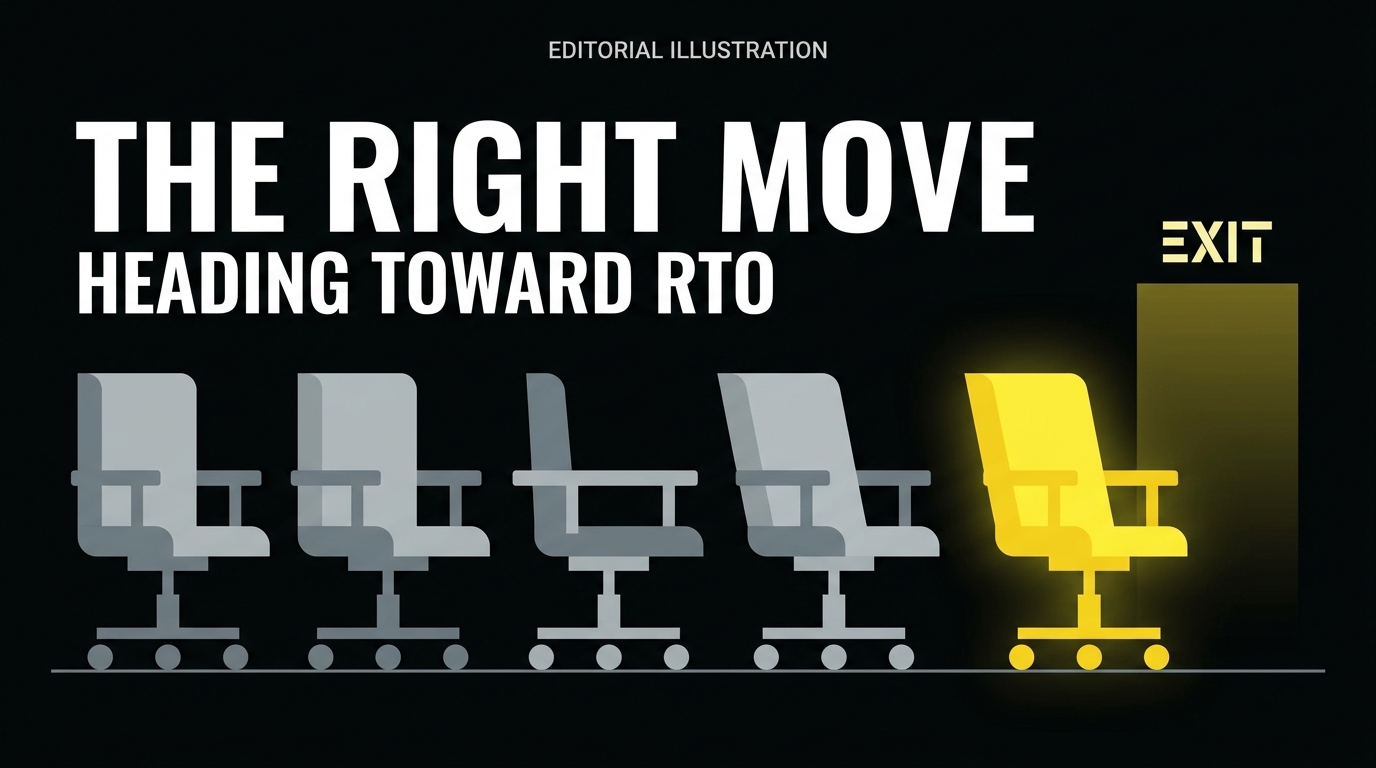
Today, 55% of Fortune 100 companies require full five-day office attendance — up from just 5% four years ago. Companies that issued RTO mandates saw average employee turnover climb 13% in the six months that followed. The most troubling statistic: high performers — those with the strongest reviews and fastest promotions — are 16% more likely to quit than their average peers after an RTO announcement. Put simply: the people with the most alternatives are the first to use them.
현재 포춘 100대 기업 중 55%가 주 5일 전일 출근을 의무화하고 있어요. 4년 전에는 그 비율이 고작 5%였어요. 출근 의무화를 시행한 기업들은 이후 6개월간 평균 이직률이 13% 상승한 것으로 나타났어요. 가장 충격적인 수치는 이것이에요. 평가가 가장 좋고 승진도 빠른 고성과자들이 같은 상황에서 퇴사를 택할 확률이 평균 동료들보다 16% 더 높아요. 쉽게 말하면, 다른 선택지가 가장 많은 사람들이 가장 먼저 그 선택지를 사용하는 거예요.
The cause
Why Companies Are Doing It Anyway
그래도 왜 기업들은 계속 출근을 강제할까요
Some executives genuinely believe face-to-face work builds culture, speeds decision-making, and reduces the miscommunication that fragments remote teams. But a 2025 survey of over 1,500 U.S. managers revealed something more unsettling: one in four C-suite executives admitted they hoped the mandate would drive voluntary departures — using office policy as a no-announcement reduction in headcount. Researchers call this tactic "quiet firing" — deliberately creating uncomfortable conditions so that employees choose to resign on their own, sparing the company the cost of formal layoffs. The problem is that undifferentiated pressure does not push out the weakest performers — it pushes out those who can leave most easily.
일부 임원들은 진심으로 대면 근무가 조직 문화를 강화하고, 의사결정 속도를 높이며, 원격 팀을 분열시키는 오해를 줄인다고 믿어요. 그런데 2025년 미국 매니저 1,500명 이상을 대상으로 한 설문에서 더 충격적인 사실이 드러났어요. C레벨 임원 4명 중 1명이 출근 의무화로 자발적 퇴사가 늘기를 기대했다고 인정했어요. 사실상 공지 없는 인력 감축 수단으로 활용한 거예요. 연구자들은 이 전술을 '조용한 해고(quiet firing)'라고 불러요. 직원들이 스스로 사직을 선택하도록 의도적으로 불편한 환경을 만드는 방법이에요. 회사는 공식 구조조정의 비용과 여론 부담을 피할 수 있죠. 문제는 이런 무차별적 압박이 성과가 낮은 직원들을 내보내는 게 아니라는 거예요. 가장 쉽게 떠날 수 있는 사람들, 바로 가장 역량 있는 직원들을 내보내요.
Korea reality
Korea Was Always Five Days — So Why Does This Matter Here?
한국은 원래 주 5일 출근이었는데, 왜 이게 중요할까요
In Korea, the RTO looks different: most large companies — Samsung, Hyundai, the major banks — never adopted widespread remote work in the first place. But the underlying dynamic is the same: when workplace conditions feel unjust or inflexible, the first employees to leave are always those with the strongest records and the most outside offers. Korea's 4.5-day workweek subsidy program, in January 2026, shows the government recognizes this tension: it offers up to 600,000 won per worker per quarter to small and mid-sized companies that reduce working hours. A pilot program in Gyeonggi Province found that 107 participating companies saw labor productivity per worker rise an estimated 2.1% year-over-year — evidence that fewer hours in the office does not mean less output.
한국에서 이 논쟁의 모습은 조금 달라요. 삼성, 현대, 주요 은행 등 대기업 대부분은 애초에 광범위한 재택근무를 채택하지 않았어요. 하지만 근본적인 역학은 동일해요. 직장 환경이 불공정하거나 경직됐다고 느껴질 때, 가장 먼저 떠나는 직원들은 항상 성과 기록이 뛰어나고 외부 제안을 가장 많이 받는 사람들이에요. 2026년 1월 시작된 한국 정부의 4.5일 근무제 지원 사업은 정부도 이 긴장을 인식하고 있음을 보여줘요. 근무 시간을 줄이는 중소기업에 직원 1인당 분기 최대 60만 원을 지원해요. 경기도 시범 사업에 참여한 107개 기업 조사에서, 1인당 노동 생산성이 전년 대비 약 2.1% 상승한 것으로 나타났어요. 사무실에서 보내는 시간이 줄어도 성과가 줄지 않는다는 증거예요.
Quick fix
One Metric Worth Tracking Right Now
지금 당장 살펴봐야 할 지표 하나
If your company is tightening its office policy, the most useful metric to watch is voluntary turnover among your top performers in the 90 days after the announcement. Research consistently shows that what drives sustained high performance is not physical presence but clarity of goals, fair and timely feedback, and genuine trust between people and their direct managers. Next time your company announces a new office policy, ask your direct manager one question: what specific outcome are we trying to improve, and how will we measure it in 90 days?
회사의 출근 정책이 강화되고 있다면, 지금 당장 주시해야 할 가장 유용한 지표는 '공지 후 90일 이내 고성과자의 자발적 퇴사율'이에요. 연구들이 일관되게 보여주는 사실이 있어요. 지속적인 고성과를 만드는 건 물리적 출석이 아니에요. 목표의 명확성, 공정하고 시의적절한 피드백, 그리고 직원과 직속 관리자 사이의 진짜 신뢰예요. 앞으로 회사에서 새로운 출근 정책을 발표할 때, 여러분의 직속 매니저에게 딱 한 가지만 물어보세요: 우리가 개선하려는 구체적인 결과가 무엇이고, 90일 후에 어떻게 측정할 건가요?
이 칼럼이 마음에 드셨나요?
새 칼럼이 발행되면 영문 + 한글 본문을 통째로 메일로 보내드려요. 매일 아침, 광고 없이.
언제든 한 번에 해지할 수 있어요.