Workplace
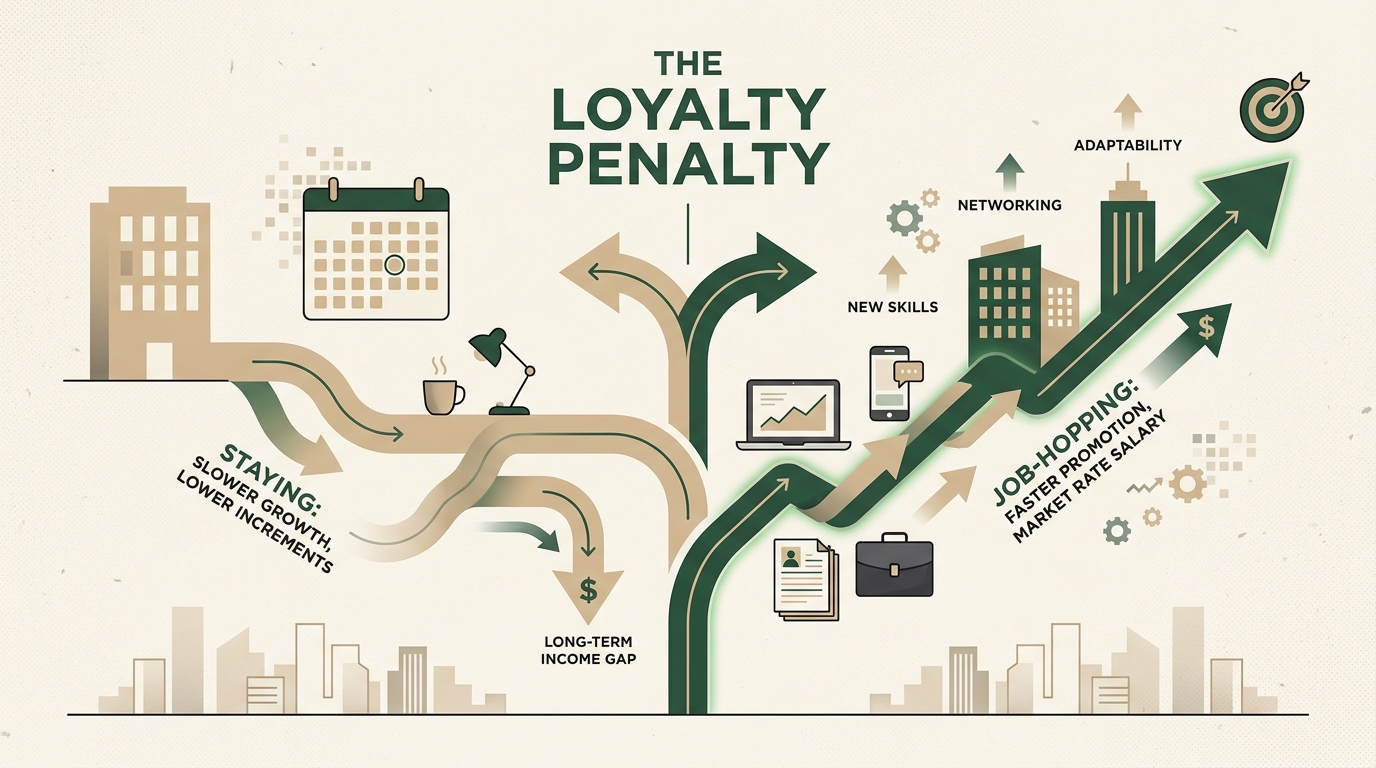
The Loyalty Penalty: Why Job-Hopping Is Now a CEO's Best Credential
충성심의 함정: 이직이 최고 경영자의 필수 조건이 된 이유
읽기 도움말Intro
The Question Every Loyal Employee Asks
충성스러운 직장인이라면 한 번쯤 품는 의문
You have been with the same company for five years, and a colleague who joined two years ago has already moved on to her third employer — yet somehow, she just got promoted to a director role at a company you have always admired. If that scenario stings a little, a new study from the National Bureau of Economic Research might explain why your instinct to stay put is working against you.
같은 회사에서 5년을 버텼는데, 2년 전에 입사한 동료는 벌써 세 번째 직장으로 옮겨갔어요. 그런데 그 동료가 당신이 늘 선망하던 회사의 이사직을 따냈다는 소식이 들려왔다면? 이 상황이 조금 불편하게 느껴진다면, NBER(미국국립경제연구소)의 최신 연구가 그 이유를 설명해줄 거예요. ---
What's new
The NBER Finding That Flips Career Wisdom Upside Down
커리어의 통념을 뒤집는 NBER 연구 결과
Researchers analyzed the career histories of Fortune 500 CEOs and found that today's top leaders have worked at significantly more companies and across more industries than their predecessors did a generation ago. The researchers interpret this pattern as evidence that prospective CEOs deliberately transition across different roles, firms, and sectors to gather a broader skill set — a strategy that boards are now actively rewarding. In short, job-hopping is no longer a red flag on a resume — for those aiming at the very top, it has become one of the most important credentials they can build.
연구팀이 Fortune 500 CEO들의 경력 이력을 분석한 결과, 오늘날 최고 경영자들은 한 세대 전 CEO들보다 훨씬 더 많은 회사와 더 다양한 산업을 경험한 것으로 나타났어요. 연구팀은 이 패턴을 두고, CEO 후보자들이 더 넓은 역량을 쌓기 위해 의도적으로 다양한 직책·기업·업종을 넘나든다는 증거라고 해석했어요. 이사회도 이런 전략을 적극적으로 높이 평가하고 있고요. 한마디로, 잦은 이직은 더 이상 이력서의 약점이 아니에요. 최고를 향해 나아가는 사람에게 이직 경험은 오히려 가장 중요한 자산 중 하나가 되었어요. ---
Why it matters
The Hidden Cost of Staying Too Long
너무 오래 머무는 것의 숨겨진 대가
For Korean workers especially, this research lands with particular weight — company loyalty has long been treated not just as a professional virtue but as a moral one, with long tenure signaling trustworthiness and dedication. But the NBER data suggests that this loyalty, when it extends too long into a organization, can quietly become the loyalty penalty — a ceiling that limits how far you can grow. Corporate boards today are making hiring decisions in environments of rapid technological change and global competition, and they increasingly want leaders who have seen and navigated multiple business contexts — not just mastered one.
특히 한국 직장인들에게 이 연구는 남다른 의미를 가져요. 회사 충성심은 오랫동안 직업적 미덕을 넘어 인격적 덕목으로 여겨져 왔고, 장기 재직이 신뢰와 헌신의 증거로 통했으니까요. 그러나 NBER 데이터는 그 충성심이 한 조직에 너무 오래 머무는 방식으로 이어질 때, 조용히 충성심의 함정이 된다고 이야기해요. 스스로 성장할 수 있는 천장을 낮추는 것이죠. 오늘날 이사회는 빠른 기술 변화와 글로벌 경쟁 속에서 최고 경영자를 뽑아요. 그들이 원하는 리더는 하나의 맥락만 깊이 파고든 사람이 아니라, 여러 비즈니스 환경을 두루 경험하고 헤쳐온 사람이에요. ---
Context
What Has Actually Changed — and What Hasn't
진짜 달라진 것, 그리고 여전히 같은 것
Early-career job-hopping has always been part of professional life, but what has changed is how organizations and executive search firms evaluate it. Where hiring managers once viewed three employers in five years as instability, many now read it as curiosity, adaptability, and the willingness to take calculated risks — qualities that are hard to demonstrate inside one company for decades. That said, the research does not advocate for switching jobs every eighteen months with no direction — the pattern that correlates with reaching the top involves strategic moves that each add a meaningfully different dimension to your experience.
커리어 초반의 잦은 이직은 언제나 직장 생활의 일부였어요. 그런데 달라진 것은 기업과 헤드헌터들이 그걸 평가하는 방식이에요. 채용 담당자들이 한때 5년 안에 세 곳을 옮긴 이력을 '불안정함'으로 봤다면, 이제는 많은 사람들이 그것을 호기심·적응력·위험 감수 의지로 읽어요. 한 회사에서 수십 년을 보내서는 보여주기 어려운 자질들이죠. 물론 이 연구가 무작정 18개월마다 이직하라는 뜻은 아니에요. 최고 자리와 상관관계를 보이는 패턴은 매번 경험에 새로운 차원을 더하는, 전략적인 이동이에요. ---
Quick fix
Rethinking Your Next Career Move
다음 커리어 이동을 다시 생각하는 법
If you are currently weighing whether to stay or move on, the question worth asking is not "How will this look on my resume?" but rather "What gap in my experience does this next role actually fill?" Early in your career, breadth matters — try different industries, team sizes, and business models, because these varied experiences are the raw material for broader judgment later. By mid-career, the goal shifts: you want depth in one domain that makes you genuinely distinct, layered on top of the diverse career background you have already built. Your most durable career asset turns out to be loyalty not to a employer but to your own growth — update your resume every six months, not because you plan to leave, but so you can see clearly what skills and value you have actually built.
지금 남을지 떠날지 고민 중이라면, 스스로에게 던질 질문은 "이게 이력서에 어떻게 보일까?"가 아니에요. "이 다음 역할이 내 경험의 어떤 공백을 채워줄까?"가 더 중요한 질문이에요. 커리어 초반에는 폭이 중요해요. 다양한 산업, 팀 규모, 사업 모델을 경험해보세요. 이 다양한 경험들이 나중에 더 넓은 판단력의 원재료가 되거든요. 커리어 중반이 되면 목표가 바뀌어요. 이미 쌓아온 다양한 경력 배경 위에, 당신을 진정으로 차별화해줄 하나의 영역에서 깊이를 더할 때예요. 결국 여전히 가치 있는 충성심은 회사에 대한 충성이 아니에요. 자신의 성장에 대한 충성이에요.
이 칼럼이 마음에 드셨나요?
새 칼럼이 발행되면 영문 + 한글 본문을 통째로 메일로 보내드려요. 매일 아침, 광고 없이.
언제든 한 번에 해지할 수 있어요.