AI Trend
The EU Just Fined Companies for Breaking Its AI Law — and the Rest of the World Is Watching
EU가 AI 법 위반 기업에 첫 벌금을 부과했어요 — 전 세계가 지켜보고 있어요
읽기 도움말The Law Bites
The World's First AI Law Just Got Real
세계 최초의 AI 법이 드디어 현실이 됐어요
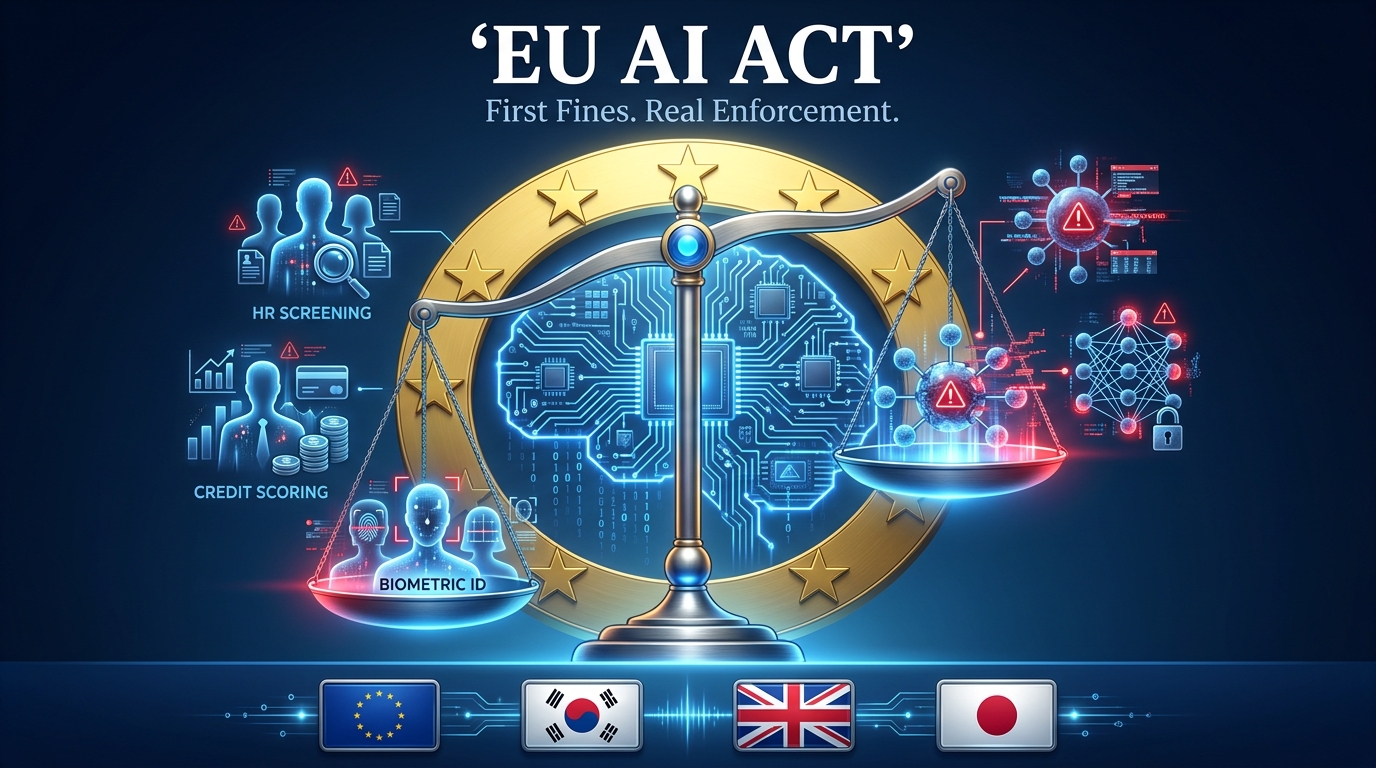
For years, critics said the European Union's ambitious AI Act was just paper — a law with teeth on the page but none in practice. That changed last week, when regulators in Germany, France, and the Netherlands issued the first official fines under the AI Act — targeting companies in HR automation, credit scoring, and biometric identification for failing to meet the law's documentation and transparency standards. The fines range from €250,000 to €2 million — numbers that sound large but are described by legal experts as deliberately symbolic fines, designed to send a message rather than inflict real financial damage.
수년 동안 비평가들은 유럽연합의 야심 찬 AI Act가 그저 종이 위의 법이라고 말했어요. 문서 위에는 이빨이 있지만 실제로는 없다고요. 그 인식이 지난주에 바뀌었어요. 독일·프랑스·네덜란드의 규제 당국이 AI Act 위반에 대한 첫 공식 벌금을 부과했거든요. HR 자동화·신용 평가·생체 인식 신원 확인(biometric identification) 분야 기업들이 법의 문서화 및 투명성 기준을 충족하지 못한 게 이유였어요. 벌금 규모는 25만 유로에서 200만 유로까지 다양해요. 큰 숫자처럼 들리지만 법률 전문가들은 이를 의도적인 상징적 벌금(symbolic fine)이라고 말해요. 실제 재정적 타격보다는 경고 메시지를 보내기 위한 설계라는 거예요.
How the Law Works
Not All AI Is Treated Equally
모든 AI가 똑같이 다뤄지지는 않아요
The EU AI Act organizes AI systems into four tiers based on their potential for harm: prohibited, high-risk AI system, limited risk, and minimal risk. The companies fined in this first wave were operating high-risk AI systems — systems that screen job applicants, evaluate creditworthiness, or verify identities — without completing the mandatory risk classification documentation that the law requires before deployment. The law's transparency requirements are particularly strict for these categories: companies must be able to explain, in plain language, exactly how their AI system makes its decisions — and must notify individuals when they are being evaluated by an automated system.
EU AI Act는 AI 시스템을 잠재적 피해 가능성에 따라 네 단계로 분류해요. 금지 대상, 고위험 AI 시스템(high-risk AI system), 제한적 위험, 최소 위험으로 나눠지죠. 이번 첫 번째 벌금 파동에서 처벌받은 기업들은 고위험 AI 시스템(high-risk AI system)을 운영하고 있었어요. 구직자를 선별하거나 신용도를 평가하거나 신원을 확인하는 시스템이었는데, 배포 전 법이 요구하는 필수 위험 등급 분류(risk classification) 문서를 완성하지 않은 게 문제였어요. 이 범주들에 대한 법의 투명성 요건(transparency requirement)은 특히 엄격해요. 기업은 AI 시스템이 어떻게 결정을 내리는지 평이한 언어로 정확하게 설명할 수 있어야 해요. 또한 자동화 시스템에 의해 평가받고 있는 개인에게는 반드시 이를 알려야 하고요.
The GDPR Parallel
We've Seen This Movie Before
우리는 이 영화를 본 적 있어요
The pattern feels familiar to anyone who watched the EU's General Data Protection Regulation — better known as GDPR — roll out after its 2018 adoption. GDPR's first fines were also small and symbolic; within three years, Meta received a €1.2 billion penalty and Amazon faced a €746 million fine — among the largest in the history of privacy law. Legal analysts say the AI Act is following the same playbook: start with a few high-profile, symbolic cases that demonstrate the law's reach, then escalate into the kind of penalties — up to 7% of global annual revenue — that force even large companies to take seriously.
이 집행 패턴은 2018년 도입 이후 GDPR이 확산되는 과정을 지켜본 사람이라면 익숙하게 느껴질 거예요. GDPR의 첫 번째 벌금도 작고 상징적이었어요. 하지만 3년 안에 메타는 12억 유로, 아마존은 7억 4,600만 유로의 벌금을 받았고, 이는 개인정보법 역사상 가장 큰 금액 중 하나가 됐어요. 법률 분석가들은 AI Act가 같은 전략을 따르고 있다고 말해요. 법의 범위를 보여주는 상징적인 고프로파일 사건 몇 건으로 시작해, 대기업도 compliance(법규 준수)를 진지하게 받아들이게 만드는 전 세계 연간 매출의 최대 7% 수준의 처벌로 확대한다는 거예요.
Global Ripple
The Rest of the World Is Taking Notes
전 세계가 메모를 하고 있어요
What happens in Brussels rarely stays in Brussels — and the AI Act is no exception. Brazil, Canada, the United Kingdom, Japan, and South Korea have all designed their own AI regulatory frameworks with direct reference to the EU AI Act's risk-based classification model, meaning the legal concepts being enforced in Europe today will shape AI governance worldwide. South Korea's AI Framework Act, passed in January 2025 and scheduled for full implementation later this year, closely mirrors the EU's approach — including similar definitions of high-risk AI use cases and comparable documentation obligations for companies.
브뤼셀에서 일어나는 일이 브뤼셀에만 머무는 경우는 드물어요. AI Act도 예외가 아니에요. 브라질·캐나다·영국·일본·한국 모두 EU AI Act의 위험 기반 분류 모델을 직접 참조해 자체 AI 규제 프레임워크를 설계했어요. 즉 오늘 유럽에서 집행되는 법적 개념들이 전 세계 AI 거버넌스를 형성하게 된다는 의미예요. 2025년 1월 제정되어 올해 하반기 전면 시행 예정인 한국의 AI 기본법은 EU의 접근 방식을 면밀히 따르고 있어요. 고위험 AI 사용 사례에 대한 유사한 정의와 기업의 비슷한 문서화 의무 등이 포함돼 있어요.
What you can do
AI Is Entering the Age of Accountability
AI가 책임의 시대로 접어들고 있어요
For years, AI development operated on an implicit principle: move fast, deploy widely, and deal with problems when — or if — they arise. The EU's first fines that this era is ending: companies using AI to make consequential decisions about people's jobs, finances, and identities will now be held to the same kind of pre-deployment that has long applied to financial products, medical devices, and environmental permits. Your company's AI deployments may already fall inside the EU AI Act's scope — audit now which customer-facing systems interact with European users, because the 3% global revenue penalty structure means a action could outweigh years of AI productivity gains.
수년 동안 AI 개발은 암묵적인 원칙에 따라 운영됐어요. 빠르게 움직이고, 광범위하게 배포하고, 문제가 생기면 — 혹은 생긴다면 — 그때 처리한다는 식이었죠. EU의 첫 번째 벌금 부과는 이 시대가 끝나고 있음을 알리는 신호예요. 사람들의 일자리, 재정, 신원에 관한 중요한 결정을 AI로 내리는 기업들은 이제 금융 상품·의료 기기·환경 허가에 오랫동안 적용되어 온 것과 같은 배포 전 accountability(책임) 기준을 따라야 할 거예요. 여러분의 회사가 고객 대면 역할에 AI를 배포하고 있다면, EU의 첫 번째 집행 벌금은 구체적인 기한이에요. 어떤 시스템이 유럽 사용자와 상호작용하는지 지금 당장 감사하세요. 글로벌 매출 3% 벌금 구조는 단 하나의 집행 조치가 여러분 회사의 수년간 AI 생산성 이익을 넘어설 수 있다는 뜻이에요.
이 칼럼이 마음에 드셨나요?
새 칼럼이 발행되면 영문 + 한글 본문을 통째로 메일로 보내드려요. 매일 아침, 광고 없이.
언제든 한 번에 해지할 수 있어요.