Markets
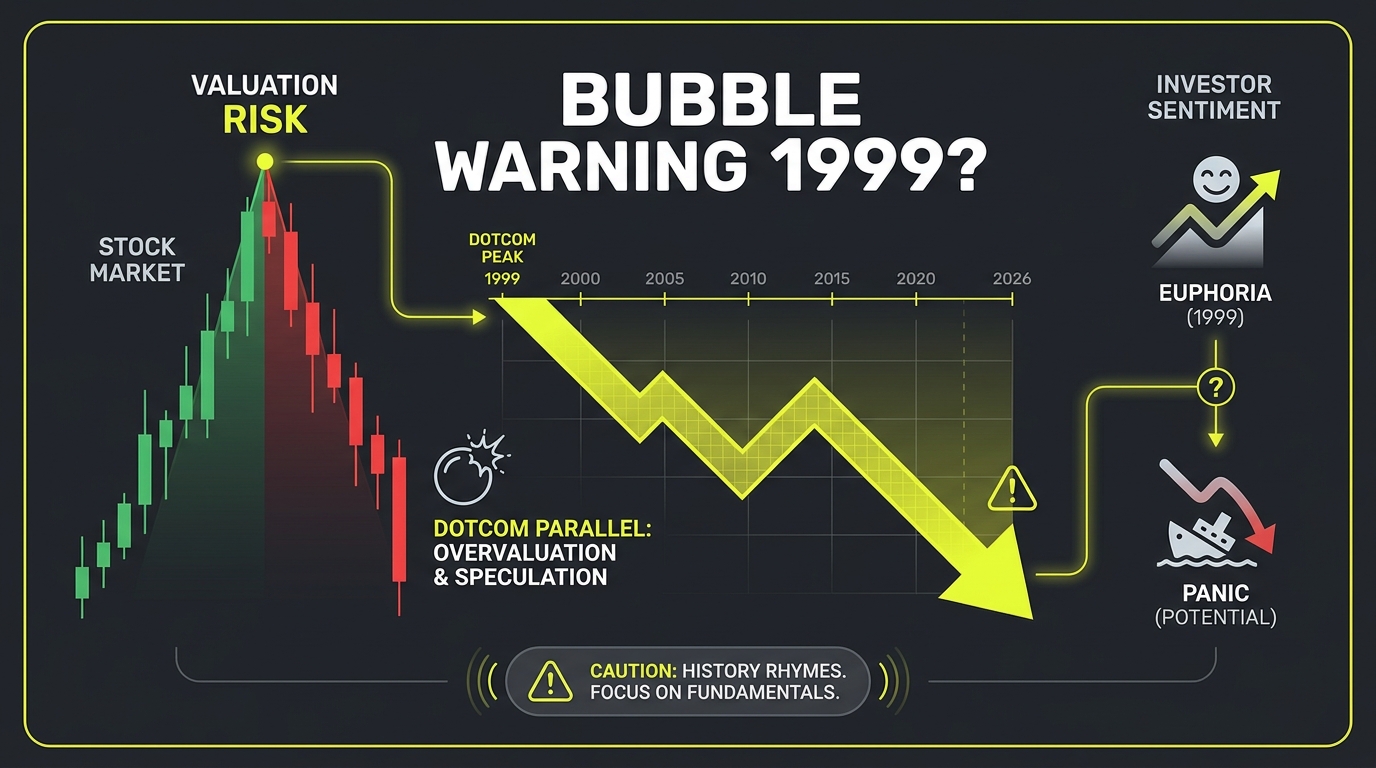
Michael Burry's Bubble Warning: Is the Market Repeating 1999?
마이클 버리의 경고: 지금 시장은 1999년을 닮았나요?
읽기 도움말Intro
A Familiar Feeling in an Uncertain Market
어딘가 낯설지 않은 이 불안감
You open your investment app this and notice something strange — your portfolio is up again, but the headlines are full of warnings. This odd disconnect between rising prices and rising anxiety is exactly what one of Wall Street's most famous contrarian investors is pointing to.
오늘 아침 투자 앱을 열어보니 수익은 또 올랐는데, 뉴스 헤드라인마다 경고가 가득해요. 주가는 오르는데 불안감도 함께 커지는, 이 묘한 괴리감에 주목한 사람이 바로 월가의 가장 유명한 역발상 투자자예요.
What's new
Burry Draws the 1999 Parallel
버리가 1999년과 나란히 놓은 이유
Michael Burry — the investor immortalized in the film "The Big Short" for predicting the 2008 financial collapse — recently posted a stark warning on social media. "Stocks are not up or down because of jobs or consumer sentiment," he wrote. "Feeling like the last months of the 1999-2000 bubble." His warning is pointed: when stock prices stop responding to real economic data, it often signals that markets are being driven by speculation rather than fundamentals.
영화 '빅쇼트'로 유명해진, 2008년 금융위기를 사전에 예측했던 마이클 버리가 최근 소셜 미디어에 섬뜩한 경고를 남겼어요. "주가가 고용 지표나 소비자 심리 때문에 오르내리는 게 아니에요. 1999-2000년 버블의 마지막 달들처럼 느껴져요."라고 그는 썼어요. 그의 경고는 명확해요. 주가가 실제 경제 지표에 반응하지 않을 때, 그것은 시장이 펀더멘털이 아닌 투기 심리로 움직이고 있다는 신호인 경우가 많아요.
Why it matters
Why This Comparison Should Get Your Attention
이 비교가 우리 귀를 잡아당기는 이유
The dot-com crash of 2000 to 2002 wiped out nearly half of the S&P 500's value — and erased almost 78% of the Nasdaq. For Korean investors who hold U.S. equity ETFs — a group that has grown dramatically over the past five years — a repeat of that kind of valuation correction would be deeply painful. Today's market, like 1999, is producing strong returns even as economic signals turn mixed — inflation stays sticky, consumer confidence is slipping, and corporate earnings growth is slowing.
2000년에서 2002년 사이 닷컴버블 붕괴로 S&P 500은 거의 절반 가까이 무너졌고, 나스닥은 무려 78%나 증발했어요. 지난 5년간 급격히 늘어난 미국 주식 ETF 보유 한국 투자자들에게, 이런 밸류에이션 조정이 다시 온다면 그 충격은 매우 클 거예요. 지금의 시장도 1999년처럼, 인플레이션이 끈질기고 소비자 신뢰도는 떨어지며 기업 실적 성장세가 둔화되는 가운데서도 강한 수익을 내고 있어요.
Context
Should You Trust Burry's Track Record?
버리의 경고, 어디까지 믿어야 할까요?
Burry's credibility comes from being right when almost everyone else was wrong — he shorted mortgage-backed securities before the 2008 collapse and made hundreds of millions of dollars. But it's equally important to note that Burry called a "greatest speculative bubble of all time" in 2021 — and while markets did correct sharply in 2022, they recovered and moved on to new highs. This tells us that even a historically accurate contrarian investor can be early — sometimes by years — which means his warning is worth taking seriously, but not literally. Burry's 2026 warning centers on what he calls 'reflexive indexation' — the feedback loop in which passive index fund inflows automatically bid up the largest index components regardless of fundamental value, creating concentration risk that is invisible to most retail investors until it reverses violently.
버리의 신뢰성은 거의 모두가 틀렸을 때 혼자 맞췄다는 데서 나와요. 2008년 붕괴 전 주택담보부증권을 공매도해 수억 달러를 벌었죠. 하지만 그는 2021년에도 "역대 최대 투기 버블"이라고 경고했고, 2022년 큰 조정이 오긴 했지만 이후 시장은 회복해 신고가를 갱신했다는 점도 함께 기억해야 해요. 역사적으로 정확한 역발상 투자자라도 타이밍이 몇 년씩 이를 수 있다는 뜻이에요. 버리의 경고는 진지하게 받아들이되, 말 그대로 해석할 필요는 없어요. 버리의 2026년 경고는 그가 '반사적 인덱스화'라고 부르는 것에 초점을 맞춰요. 패시브 인덱스 펀드 유입이 펀더멘털 가치에 상관없이 자동으로 지수의 가장 큰 구성 요소를 올리는 피드백 루프예요. 이는 격렬하게 역전되기 전까지 대부분의 개인 투자자에게 구조적으로 보이지 않는 집중 위험을 만들어요.
What to watch
What a Thoughtful Investor Does With This Warning
현명한 투자자가 이 경고로 할 수 있는 것
Defensive positioning doesn't mean selling everything — it means reviewing whether your portfolio is built to survive a significant downturn, not just a good one. Concrete steps include keeping a portion of your holdings in short-term bonds or cash equivalents, and balancing growth stocks with defensive sectors like consumer staples and utilities. Whether you agree with Burry's timing or not, the stress-test discipline he applies is one any investor can borrow: ask yourself what your portfolio looks like if both equities and bonds fall simultaneously, and whether that answer is one you could actually live with.
방어적 포지셔닝이 모든 걸 팔라는 뜻은 아니에요. 내 포트폴리오가 큰 하락장에서도 버틸 수 있게 설계되어 있는지 다시 살펴보라는 거예요. 단기 채권이나 현금성 자산에 일부를 배분하고, 성장주와 함께 소비재나 유틸리티 같은 경기방어 섹터를 균형 있게 편입하는 것이 구체적인 방법이에요. 버리의 타이밍에 동의하든 아니든, 그가 적용하는 스트레스 테스트 방식은 어떤 투자자든 빌려올 수 있는 도구예요. 주식과 채권이 동시에 하락한다면 여러분의 포트폴리오가 어떻게 보이는지, 그리고 그 답을 실제로 감당할 수 있는지 스스로에게 물어보세요.
이 칼럼이 마음에 드셨나요?
새 칼럼이 발행되면 영문 + 한글 본문을 통째로 메일로 보내드려요. 매일 아침, 광고 없이.
언제든 한 번에 해지할 수 있어요.