Business
Korea's $350 Billion Promise: The Trade Deal That Is Reshaping Samsung and Hyundai
3,500억 달러의 약속: 삼성과 현대를 다시 쓰는 무역 합의
읽기 도움말Hook
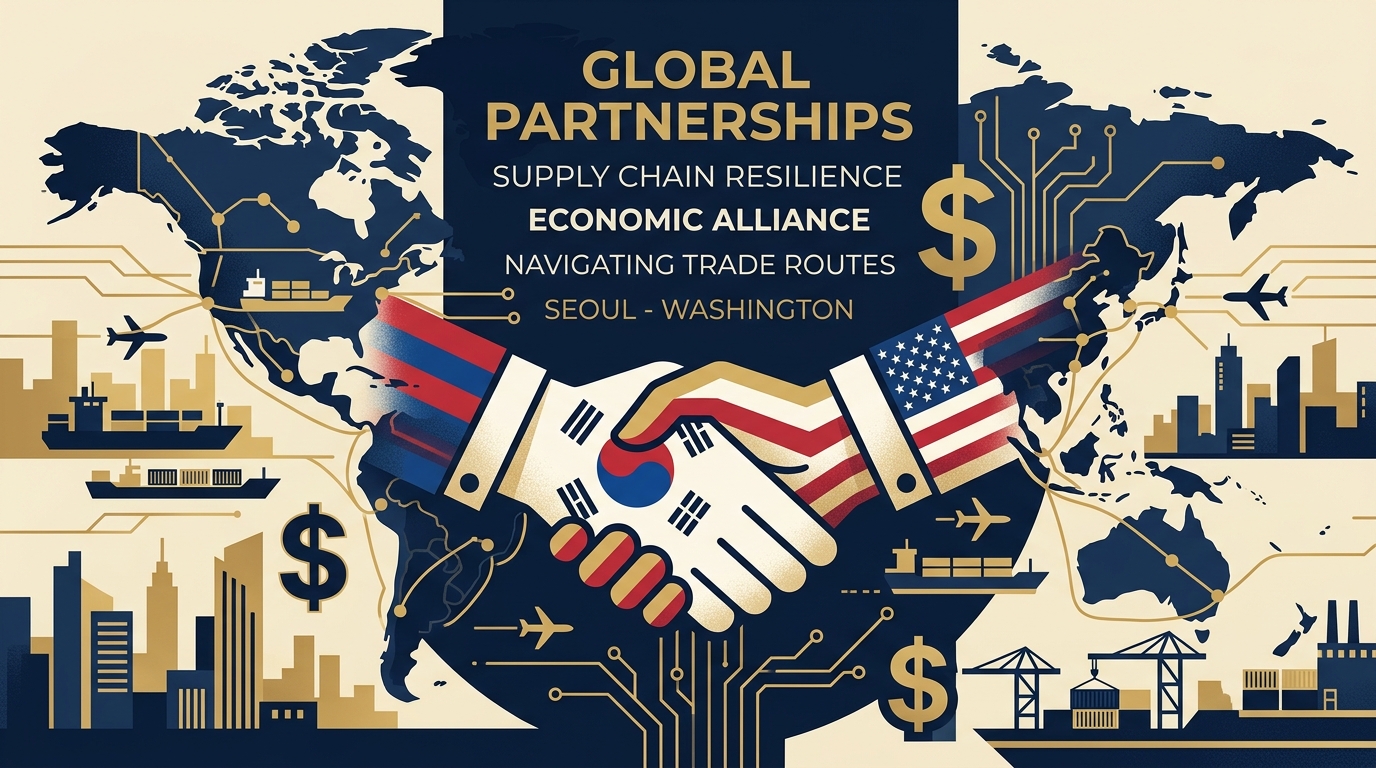
The $350 Billion Handshake
3,500억 달러의 악수
In late 2025, South Korea and the United States struck a landmark trade deal: Seoul pledged to invest $350 billion in American industries over the next several years, and Washington agreed to reduce tariffs on Korean cars from 25% to 15% and to offer favorable treatment on Korean semiconductor exports. The numbers look impressive on paper. Of the $350 billion, $150 billion is earmarked for the U.S. shipbuilding sector — a Pentagon strategic priority — while the remaining $200 billion is distributed across other American industries, capped at $20 billion per year to limit the financial strain on Korean corporate balance sheets. But deals of this scale always come with hidden price tags. By mid-2026, the real costs are becoming visible — not in the fine print of the agreement itself, but in the earnings reports, supply chain maps, and capital allocation decisions of South Korea's largest companies.
2025년 말, 한국과 미국이 역사적인 무역 합의를 맺었어요. 서울은 향후 수년간 미국 산업에 3,500억 달러를 투자하겠다고 약속했고, 워싱턴은 한국 자동차 관세를 25%에서 15%로 낮추고 반도체 수출에도 유리한 조건을 제공하기로 했어요. 숫자만 보면 인상적이에요. 3,500억 달러 중 1,500억 달러는 미국 방위부가 전략적 우선순위로 꼽는 조선업에 배정됐고, 나머지 2,000억 달러는 다른 미국 산업에 분산되며 한국 기업의 재무 부담을 제한하기 위해 연간 최대 200억 달러로 속도를 제한했어요. 하지만 이 규모의 합의에는 늘 보이지 않는 대가가 따라요. 2026년 중반이 되자, 진짜 비용이 드러나기 시작했어요. 합의문의 세부 조항이 아니라, 한국 대기업들의 실적 발표와 공급망 지도, 그리고 자본 배분 결정 속에서요.
The story
Twenty-Five Percent — The Number That Forced Korea's Hand
25% — 한국을 움직인 숫자
When the Trump administration initially imposed 25% tariffs on Korean automobiles and auto parts, the arithmetic was brutal for Hyundai and Kia. In the third quarter of 2025 alone, Hyundai reported that U.S. tariffs cost the company 1.8 trillion won — roughly $1.2 billion — in a three-month period. The semiconductor story was different but no less urgent. Korean chip exports — dominated by Samsung and SK Hynix — had benefited from a temporary carve-out, but with AI chip demand surging globally, any tariff threat on semiconductors risked disrupting the supply chains of American tech companies that depend on Korean memory for their AI servers. That dual vulnerability — automobiles exposed, semiconductors at risk — gave Seoul very little room to negotiate and almost no time to wait. The $350 billion pledge was, in many ways, less a strategic investment and more a very expensive insurance policy paid upfront to preserve market access.
트럼프 행정부가 처음 한국 자동차와 자동차 부품에 25% 관세를 부과했을 때, 현대와 기아에게 계산은 가혹했어요. 2025년 3분기 단 한 분기에만, 현대는 미국 관세로 약 1조 8천억 원, 12억 달러에 달하는 비용이 발생했다고 밝혔어요. 반도체 상황은 달랐지만 덜 긴박하지 않았어요. 삼성과 SK하이닉스가 주도하는 한국 반도체 수출은 한시적 예외 혜택을 받고 있었지만, AI 칩 수요가 전 세계적으로 급증하면서 반도체에 관세 위협이 생기면 AI 서버용 한국 메모리에 의존하는 미국 기술 기업의 공급망을 교란할 수 있었어요. 자동차는 이미 노출되고, 반도체는 위협받는 이 이중 취약성 때문에, 서울은 협상 공간이 거의 없었고 시간도 없었어요. 3,500억 달러 약속은 여러 면에서 전략적 투자라기보다 시장 접근권을 유지하기 위해 선불로 낸 매우 비싼 보험에 더 가까웠어요.
Inside the deal
Samsung's Trillion-Won Balancing Act
삼성의 조 단위 균형 곡예
Samsung Electronics announced it would invest 450 trillion won — approximately $310 billion — over the next five years to expand domestic operations, including adding another production line at its Pyeongtaek semiconductor campus, which already stands as the world's largest chip manufacturing complex. Simultaneously, Samsung's $17 billion semiconductor fab in Taylor, Texas, continues ramping up operations. The Taylor plant — the largest foreign direct investment in Texas history — is designed to produce advanced logic chips that complement Samsung's memory dominance, giving the company a manufacturing presence inside the United States regardless of how trade policy shifts. The question investors are asking is whether Samsung can sustain both a massive domestic expansion and a major U.S. buildout at the same time. Semiconductor cycles are notoriously unforgiving — chips planned in 2025 must be manufactured, priced, and sold regardless of where trade policy lands in 2027 or 2028, which means capital allocation decisions made today carry unusually high long-term risk.
삼성전자는 향후 5년간 약 310억 달러에 해당하는 450조 원을 투자해 국내 생산을 확장하겠다고 발표했어요. 여기에는 이미 세계 최대 반도체 제조 단지로 자리 잡은 평택 캠퍼스에 생산 라인을 추가하는 계획이 포함돼요. 동시에, 텍사스 테일러에 건설된 삼성의 170억 달러 반도체 공장은 계속 생산을 늘려가고 있어요. 텍사스 역사상 최대 외국인 직접 투자인 테일러 공장은 삼성의 메모리 지배력을 보완하는 첨단 로직 칩 생산을 목표로 하며, 무역 정책이 어느 방향으로 흘러도 미국 내 제조 기반을 확보하는 역할을 해요. 투자자들이 묻는 질문은 삼성이 대규모 국내 확장과 미국 대형 건설을 동시에 감당할 수 있느냐예요. 반도체 사이클은 가혹하기로 유명해요. 2025년에 계획된 칩은 2027년이나 2028년에 무역 정책이 어디로 가든 제조되고, 가격이 책정되고, 판매되어야 해요. 즉, 지금 내리는 자본 배분 결정은 이례적으로 높은 장기 리스크를 안고 있어요.
Ripple
Hyundai's $86 Billion EV Bet Under a Tariff Shadow
관세 그림자 아래에서의 현대의 860조 원 전기차 베팅
Hyundai Motor Group responded to the trade deal with its own ambitious plan: 125 trillion won — roughly $86 billion — committed from 2026 to 2030 toward domestic research and development in AI, robotics, and autonomous driving. The investment was designed to that the U.S.-directed capital would not come at the cost of Korean jobs or Korean innovation capacity. On the American side, Hyundai's $7 billion manufacturing campus in Bryan County, Georgia, has been assembling electric vehicles and EV batteries since 2025, employing over 8,500 workers. The timing proved fortunate: the plant gave Hyundai a credible "made in America" narrative precisely when tariff pressure was at its most intense. However, the EV market in 2026 has been more complicated than the plans of 2023 assumed. Global EV demand growth has slowed from its breakneck pace, and Hyundai now faces a challenge familiar to every major automaker: billions committed to EV infrastructure in anticipation of demand that has paused for breath, creating a window of overcapacity and margin compression.
현대자동차그룹은 무역 합의에 자체적인 야심 찬 계획으로 응답했어요. 2026년부터 2030년까지 AI, 로봇, 자율주행 분야 국내 R&D에 약 860억 달러에 해당하는 125조 원을 투자하겠다는 계획이에요. 이 투자는 미국을 향한 자본이 한국의 일자리나 혁신 역량을 희생시키지 않을 것임을 보여주기 위한 것이었어요. 미국 쪽으로는, 조지아주 브라이언 카운티의 70억 달러 규모 현대 제조 캠퍼스가 2025년부터 전기차와 전기차 배터리를 조립하며 8,500명 이상을 고용하고 있어요. 타이밍은 운이 좋았어요. 관세 압박이 가장 거셀 때 마침 현대에 신뢰할 만한 '미국산' 이야기를 제공했으니까요. 그러나 2026년 전기차 시장은 2023년의 계획이 가정했던 것보다 복잡해요. 글로벌 전기차 수요 증가가 숨 가쁜 속도에서 둔화됐고, 현대는 이제 모든 주요 완성차 업체에게 익숙한 도전에 직면해 있어요. 숨 고르기에 들어간 수요를 기대하며 전기차 인프라에 수십억 달러를 투자했다가 과잉 생산과 마진 압박의 시간이 생긴 거예요.
Inside the deal
When the Tariff Bill Arrives on the Earnings Statement
관세 청구서가 실적표에 도착할 때
Across the broader corporate world, a critical threshold is fast approaching. Research shows that 73% of supply chain leaders expect to hit their "tariff absorption wall" by the end of 2026 — the point at which tariff costs can no longer be absorbed as corporate losses and must instead be passed on to consumers through higher prices. The split between confident and anxious companies is stark. In mid-2026 surveys, 96% of low-uncertainty firms — those with diversified supply chains across multiple regions — forecast revenue growth. Fewer than one in four high-uncertainty firms said the same, with half reporting shrinking profit margins and elevated client turnover.
더 넓은 기업 세계에서 중대한 임계점이 빠르게 다가오고 있어요. 연구에 따르면, 공급망 리더의 73%가 2026년 말까지 '관세 흡수 한계'에 도달할 것으로 예상해요. 이 한계란 더 이상 관세 비용을 기업 손실로 흡수할 수 없어 더 높은 가격으로 소비자에게 전가해야 하는 시점이에요. 자신 있는 기업과 불안한 기업 사이의 격차는 극명해요. 2026년 중반 설문에서, 여러 지역에 걸쳐 공급망이 다각화된 불확실성 낮은 기업의 96%가 매출 성장을 예측했어요. 반면 불확실성 높은 기업은 4개 중 1개도 채 안 됐고, 그중 절반이 이익 마진 축소와 높은 고객 이탈을 보고했어요.
The bigger picture
Trade Policy Is Now a Permanent Cost, Not a Passing Storm
무역 정책은 이제 지나가는 폭풍이 아닌 영구적 비용
The most durable lesson emerging from the 2025 Korea-U.S. trade deal — visible now in real-time earnings and capital flows — is that trade policy has permanently shifted from a background condition to a core business variable. Companies and countries that embed tariff costs into long-term financial models, rather than treating them as temporary friction, are already pulling ahead of those still waiting for a return to the pre-2025 baseline. For Korean companies, the dual investment commitment — massive domestic spending plus a U.S. manufacturing presence — reflects a calculated understanding that the next wave of global growth will favor companies rooted in both the world's largest technology market and one of its most sophisticated supply chain ecosystems. Getting that balance right is the central strategic challenge of the next five years. Whether you track Samsung's quarterly chip margins or Hyundai's U.S. delivery numbers, the most telling in late 2026 will be whether these companies can convert a $350 billion political promise into durable operating profit — not just for shareholders, but for the workers, suppliers, and communities on both sides of the Pacific whose livelihoods now depend on getting that long bet right.
2025년 한미 무역 합의에서 실적과 자본 흐름을 통해 지금 실시간으로 드러나는 가장 지속적인 교훈은, 무역 정책이 영구적으로 배경 조건에서 핵심 사업 변수로 전환됐다는 거예요. 관세를 일시적 마찰로 보는 대신 장기 재무 모델에 내재화한 기업과 국가는 이미 2025년 이전 기준선으로의 복귀를 기다리는 곳들보다 앞서가고 있어요. 한국 기업에게 대규모 국내 지출과 미국 제조 기반을 동시에 약속하는 이중 투자 헌신은, 세계 최대 기술 시장인 미국과 가장 정교한 공급망 생태계 중 하나인 한국 양쪽 모두에 뿌리를 둔 기업이 다음 글로벌 성장 파동에서 유리하다는 계산된 인식을 반영해요. 그 균형을 제대로 맞추는 것이 향후 5년의 핵심 전략적 과제예요. 삼성의 분기별 칩 마진을 추적하든, 현대의 미국 납품 실적을 팔로우하든, 2026년 하반기에 가장 주목해야 할 신호는 이 기업들이 3,500억 달러짜리 정치적 약속을 지속 가능한 영업이익으로 바꿀 수 있느냐예요. 주주만을 위해서가 아니라, 그 장기 베팅을 제대로 성사시키는 데 생계가 달린 태평양 양쪽의 독자, 공급업체, 지역 사회를 위해서요.
이 칼럼이 마음에 드셨나요?
새 칼럼이 발행되면 영문 + 한글 본문을 통째로 메일로 보내드려요. 매일 아침, 광고 없이.
언제든 한 번에 해지할 수 있어요.