Workplace
The First Rung Is Gone: How AI Is Erasing Entry-Level Jobs
첫 번째 발판이 사라졌다: AI가 신입 일자리를 지우고 있다
읽기 도움말Intro
The Classic Trap Gets a New Lock
오래된 함정에 새 자물쇠가 달렸다
You've heard the old frustration: you can't get a job without experience, and you can't get experience without a job. For decades, that paradox had a workaround: entry-level jobs existed precisely to give new graduates a place to start.
"경력 없이는 취직이 안 되고, 취직 없이는 경력을 못 쌓는다" — 한번쯤 들어봤거나, 직접 느껴봤을 딜레마예요. 수십 년간 이 모순에는 탈출구가 있었어요. 바로 신입 직책(entry-level job) — 경력이 없어도 지원할 수 있는 초급 직무들이 그 시작점이 되어줬거든요.
What's new
AI Took the Training Wheels
AI가 연습용 자전거를 가져갔다
That starting point is disappearing. As AI automates the tasks that once defined first jobs — data entry, research summaries, basic code review, draft reports — companies are hiring fewer entry-level workers. According to a recent Fortune analysis, this is creating an experience gap: employers still demand hands-on skills, but the entry-level roles where those skills used to be built are rapidly vanishing. The cycle is now structural, not situational: it isn't a bad economy — it's a permanent shift in what entry-level jobs look like.
그런데 지금, 그 시작점이 사라지고 있어요. AI가 데이터 입력, 리서치 요약, 초급 코드 리뷰, 보고서 초안 작성 등 신입이 맡아왔던 업무들을 자동화하면서, 기업들이 신입 채용 자체를 줄이고 있거든요. 최근 Fortune 분석에 따르면 이것이 바로 경험 격차(experience gap)를 만들어내고 있어요. 고용주들은 여전히 실전 역량을 요구하지만, 그 역량을 키워주던 신입 직책들이 빠르게 사라지고 있는 거예요. 이 악순환은 이제 단순한 불황 탓이 아니에요. 신입 직책(entry-level jobs) 자체의 모습이 구조적으로 바뀌고 있는 거예요.
Why it matters
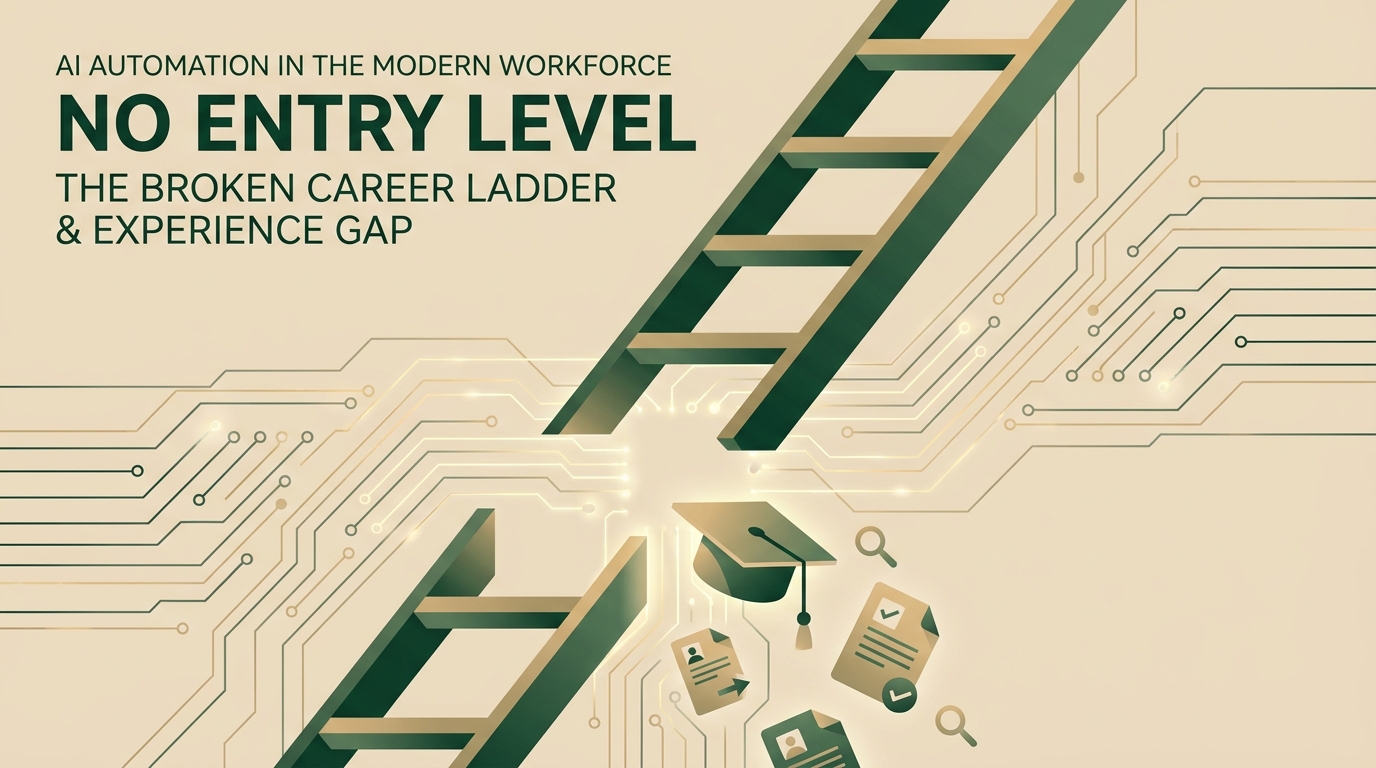
When the Ladder Loses Its Bottom Rung
사다리의 첫 발판이 없어질 때
Traditionally, that first job wasn't just employment — it was training. New graduates learned how professionals actually work, how to navigate an organization, and how to translate classroom theory into real output. When AI removes those roles, it doesn't just cut jobs — it removes the on-ramp to a career. For Korean graduates especially, this matters: youth unemployment sits at 7.8% in early 2026, and large companies continue to shrink new-hire intake even as they expand AI adoption.
전통적으로 첫 직장은 단순한 취직이 아니었어요. 그 자체가 실전 훈련의 장이었죠. 신입사원들은 그곳에서 실제 업무 방식을 배우고, 조직을 헤쳐나가는 법을 익히고, 학교에서 배운 이론을 실제 성과물로 연결하는 법을 터득했어요. AI가 그 역할들을 없애면, 단순히 일자리만 사라지는 게 아니에요. 커리어로 진입하는 경사로 자체가 사라지는 거예요. 특히 한국 취준생에게는 더욱 절실한 문제예요. 2026년 상반기 청년 실업률은 7.8%이고, 대기업들은 AI 도입을 확대하면서도 신입 채용은 계속 줄이고 있으니까요.
Context
Can Universities Fill the Gap?
대학이 이 공백을 메울 수 있을까?
Fortune's analysis points to universities as the institutions most capable of bridging this divide — but only if they fundamentally rethink what "preparing students" means. The question is no longer whether a student completed a program, but whether the institution genuinely prepared them for modern workforce readiness. Some universities are experimenting with AI-embedded internships and project-based curricula — placing students in real organizational problems before they graduate.
Fortune 분석은 대학이 이 공백을 메울 가장 현실적인 기관이라고 봐요. 단, 학생들을 "준비시킨다"는 것의 의미를 근본적으로 다시 정의해야 한다는 전제 아래에서요. 이제 중요한 건 학생이 학위 과정을 마쳤느냐가 아니에요. 학교가 학생을 현대 직장에 진짜로 준비시켰느냐, 즉 취업 준비도(workforce readiness)가 핵심이 되고 있어요. 일부 대학들은 AI 통합 인턴십이나 프로젝트 기반 커리큘럼을 시도하며, 학생들이 졸업 전에 실제 조직 문제를 직접 다뤄볼 수 있게 하고 있어요.
Quick fix
Climbing Without the Bottom Rung
첫 발판 없이 사다리를 오르는 법
If the traditional career ladder no longer has its first rung, the path forward requires building your own starting point. Side projects, open-source contributions, AI-tool portfolios, and structured bootcamps are increasingly the signals employers look for when entry-level roles can't provide the reference point. If you are early in your career or managing someone who is, the most important investment right now is not learning another AI tool — it is building the judgment, relationships, and real-world context that AI cannot simulate and experience cannot skip.
전통적인 경력 사다리(career ladder)의 첫 발판이 사라졌다면, 이제는 스스로 자신만의 시작점을 만들어야 하는 시대예요. 사이드 프로젝트, 오픈소스 기여, AI 도구 포트폴리오, 부트캠프 — 신입 직책이 더 이상 기준이 되어주지 못할 때 고용주들이 눈여겨보는 신호들이 이런 것들로 옮겨가고 있어요. 경력 초반이든, 그런 사람을 이끌고 있든, 지금 가장 중요한 투자는 또 다른 AI 도구를 배우는 것이 아니에요. AI가 흉내 낼 수 없고 경험이 건너뛸 수 없는 판단력, 관계, 현실 맥락을 쌓는 것이 여러분에게 남은 유일한 진짜 경쟁 우위예요.
이 칼럼이 마음에 드셨나요?
새 칼럼이 발행되면 영문 + 한글 본문을 통째로 메일로 보내드려요. 매일 아침, 광고 없이.
언제든 한 번에 해지할 수 있어요.